The 30-Second Version: What the Bible Is All About
The Troubled Love Story of the Bible
In the movie “Bruce Almighty,” an ordinary guy named Bruce is given God’s powers for a while—he can do anything God can do! But like God, he has one limitation—he cannot force people to love him, because humans have free will.
During the film, Bruce’s girlfriend, Grace, decides to break up with him, and Bruce is trying everything he can to get her back. He uses his supernatural powers to get his job back and become famous. He pulls the moon in closer when he is with Grace so it looks bigger and more romantic. He causes birds and clouds to form messages that remind her of Bruce, and encourage her to forgive him. But none of it is working. Instead, Grace is getting more and more determined to dump him.
At one point, “Bruce Almighty” becomes so desperate that he stands in front of her, waving his arms as though he is casting a spell, and commands her, “Love me, Grace! Love me!” She just looks at him as though he is crazy, and walks away. (If you want to see how the story ends, maybe you could rent the movie!)
Anyway, that moment in the movie offers a vivid “snapshot” of the reason for the entire Bible. If you ever thought God doesn’t have “problems,” here is one for you–rejected love. The Bible is the story of what God has done, and is still doing, about it.
Once you understand this basic “storyline,” then you understand what the Bible is really all about. Written on a business card, it might look something like this:
God created people and loves people.
But people reject God.
Therefore, God is seeking to restore this broken relationship.
And that’s the 30-second short version! Of course, there is much more to learn, so please read on and let’s go a little deeper.
Dig Deeper: A Closer Look at the Bible
A Story Jesus Told that Reveals WHY the Bible was Written
This overarching “story” of God trying to respond to the problem of human rejection is so basic to understanding the Bible that it is worth illustrating this point again—this time instead of comparing it to the movie “Bruce Almighty,” let’s look at a well-known story found in the Bible itself.
One of the most famous stories that Jesus ever told is called the “Story of the Prodigal Son.” It is found in Luke 15:11-32. (If you don’t know how to look up a scripture with this numbering system, the end of this chapter will explain simply how to do that.)
In the story Jesus told, a father has two sons. The younger son gets tired of living the good life at home, so he demands that his father give him his inheritance early–while the father is still alive! Even though that is rude and disrespectful in every way, the father is kind enough to sell half of his farm, and give all that money to his son. Once he had his greedy hands on that big pile of money, the younger son ran off to a foreign land, and wasted the money on prostitutes and throwing huge parties and basically, doing everything that his father would not have approved of.
Eventually the money ran out, so he landed a job helping a farmer feed his pigs. However, he got paid so little he was nearly starving. One day, when he was so hungry that even the slop that he was feeding the pigs looked delicious to him, his eyes opened, and he decided to go back home. He knew he had “blown it” with his father, but he hoped that maybe his father would just hire him as one of his farm hands, since at least his father paid them generously.
Meanwhile, back at the farm, the father just couldn’t forget about his lost son. He never stopped looking out the window for him, hoping he would come back home. So on that happy day that he did see his son returning, he rushed out to meet him, kissed him, put a ring on his finger and a special robe on him, and threw a huge party to celebrate the boy’s return home.
This story has a happy ending, but let’s rewind to the moment when the father can’t stop staring off into the distance, hoping to see his son returning to him.
He desperately wants to be reunited with his lost son, but he knows he cannot force his son to come back. This is a terrible, powerless feeling that anyone who has a child that leaves home for days on drug binges understands all too well. Such a parent has also probably tried all kinds of possible solutions, like ignoring the problem, confronting the problem, using “tough love,” turning the child over to the courts, forcing the child to go to drug rehab units…but nothing can change two things. First, none of it changes the love in this father’s heart for his lost son, or dim his hope that someday, they will be together again. And second, nothing can force the child to come home. The son is free to make his choices, so only the son can “open his eyes,” come back home, and make the happy ending come true.
Jesus told the Story of the Prodigal Son as a way to help us understand how much God wants each of us to “return” to God and live in a good relationship with God. The story is not really about somebody else–it is about us. Do you see? The Bible is the story of God’s efforts to bring his children (us) back home, and even though each of us has the power to say “no” to God, God desperately wants to find a way for our story to have a happy ending.
If you understand this basic “storyline,” then you already understand what the Bible is really all about:
God created people and God loves people.
But, people reject God.
Therefore, God is seeking to restore the relationship.
The “end of the story” is still being written, because each person has their own relationship with God–we can still choose either to accept or reject God. The Bible was written to encourage us to “come home” to God and live in a good relationship with God.
Hopefully you are beginning to understand the big picture, the main “storyline” of the whole Bible.
Now, let’s take a closer look at the Bible, including how, when, and why it was written.
How, When, and Why was the Bible Written?
Maybe you have ordered a book or some other product online, but before you purchased it, you looked at the comments that previous customers made about the seller. If people gave a negative review, like “Beware of this seller–he is slow to ship the product, and when it arrived damaged, he refused to refund my money,” then most likely you will decide to buy from someone who gets comments more like, “Everything went great! Buy with confidence from this seller!” Right?
Most people choose to buy from the seller who has the best recommendations, or “testimonies.” In a similar way, a “testament” could be understood as a way that the people who wrote the Bible chose to “recommend” God to their intended audience. They wrote about their experiences with God, hoping that it encourages their readers to develop a good relationship with God–that is their “testimonial,” or their reason for writing…a “testament.”
Our Christian Bible is divided into two “testaments.” One is the “Old Testament,” which makes up roughly the first 3/4 of the Bible, and the other is called the “New Testament,” which is approximately the last 1/4 of the Bible.
The “Old Testament” contains the Jewish scriptures; the Jewish people existed as a people for approximately 2000 years before Jesus was born. During that long history, the various books of the Old Testament were first written for various purposes. For example, the psalms are a collection of 150 songs that the Jewish people used in worship. Like our hymnal, they may not have all been written by the same person, and the songs that proved to be favorites, like the famous Psalm 23, are the ones that consistently stayed in the “list” through the centuries even if others faded from popularity over time. The other books of the Old Testament similarly were written with specific purposes in mind–maybe to remind the Jewish people about how God had actively supported them through their long history as a way to build up their faith that God would continue to help them in the future. When a ‘book” was helpful to many people through time, it was copied over and over and shared (they didn’t have the Internet–just handwritten copies!). Eventually the books we have today were accepted by the Jewish people as “scripture.” This process took a long time, and was not the same for every book in the Old Testament. Remember that Jesus grew up Jewish, and so did many of the people he interacted with. That means his “Bible” was what we call the “Old Testament,” and we know that he loved to study it and talk about the scriptures in the temple (his “church”).
Much later, after Jesus had lived his life and the Christian Church was just getting started, the New Testament began to be written. Not long after Jesus died, people wanted to remember all that Jesus said and did, so several different people wrote “Gospels” about his life and teaching. One of those, Luke, also wrote the book of “Acts” which tells us about what the early church did those first few years. So if you read the gospel of Luke, the “sequel” is the book of Acts. The New Testament also includes many letters written by the Apostle Paul and other early Christians. Eventually Christians called the Jewish scriptures the “Old Testament” to distinguish it from the “New Testament,” the scriptures that tell Christians about Jesus. I hope that explains why, in the Bible Christians have today, the “Old Testament” is printed first, followed by the “New Testament.”
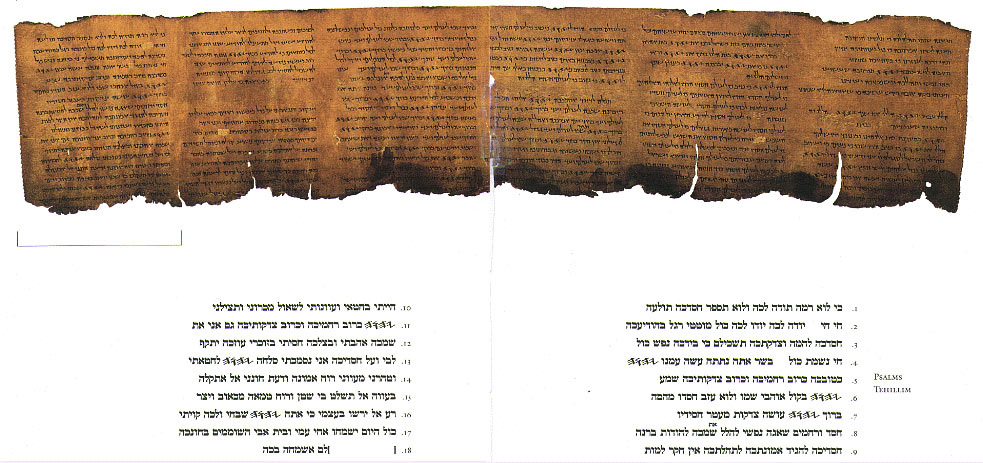
Now, if you were to visit either an ancient or modern Jewish Temple, Christians will notice that the Jewish scriptures are read during their worship service, still in Hebrew, which is the language the Jewish scriptures were originally written in. The scripture will be read from a large scroll, often made of a heavy paper (but in the ancient world it was written on either papyrus-made paper or leather). The scroll is kept in a sacred area, behind a curtain, in the front part of the temple. It is unrolled to the place where the reading occurs, and then carefully read during worship for all to hear before it is placed back behind the curtain. That was the experience Jesus had of the “scriptures,” back in the days before printing presses and modern-bound books. The entire “Old Testament” did not fit on one scroll. Rather, there were many scrolls–some books, like “1 Kings” and “2 Kings” are numbered like that simply because the whole book of “Kings” could not fit on one handwritten scroll–so “1 Kings” was just the first half of the book, and “2 Kings” was the scroll that contained the last half of the book. Each scroll was written by hand by highly trained “scribes” whose profession it was to carefully make new copies of the sacred scriptures every time one of the scrolls became too worn out to continue using in worship. Fortunately, the old scrolls were considered so sacred they did not throw them away; they often put them in sealed pottery vases and stored them deep in caves–the perfect place to preserve the scrolls for centuries. Because of that habit of theirs, today archeologists have access to study ancient scrolls dating back over 2000 years!
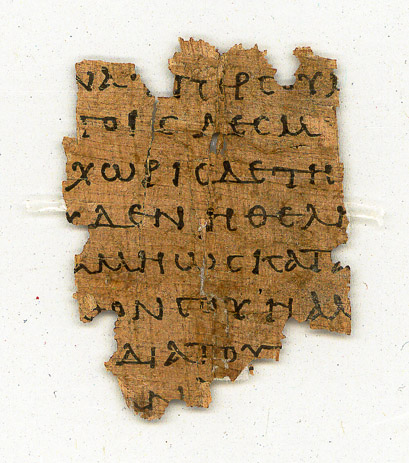
In a similar way, the writings of early Christians were usually written in Greek (Greek is the language many people in Jesus’ day spoke). For example, the Apostle Paul wrote at least two letters to the church in the town of Corinth; after all, he traveled a lot, and while he was out of town, he often wrote letters to churches in distant places to help answer their questions or settle disputes they were having. He was a great writer, and they often treasured his letters, reread them, and even copied them for other churches to read. So Paul did not know he was writing the Bible, but in fact, many of his letters become so popular because of their beautiful and helpful thoughts that they ended up being included in the Bible. In fact, all the books in the Bible from “Romans” to “Philemon” are letters written by Paul, arranged simply from the longest letter to the shortest!
As you can see, writings and letters were often considered sacred as the years went by, so early churches kept their copies safe for centuries, enabling modern-day biblical scholars to study the old copies and make sure that the Bible we read today accurately reflects the “original” books of the Bible as they were written long ago.
Interestingly, there are actually many letters and books and even gospels about Jesus’ life that are NOT included in today’s Bible. The actual list of 66 books that the Bible contains today was gradually formed by centuries of reading, use in worship, and discussion by church leaders.
For example, scholars have an ancient “Gospel according to Peter,” and even though it talks about Jesus, it is not included in the Bible (you can read about it online though). The Bible does include four gospels about Jesus–written by Matthew, Mark, Luke, and John. That is because over time, the early church found those four to be the most helpful and most meaningful. So the Bible does not contain every example of ancient writing that scholars possess–but it contains the particular “books” or other writings that people found the most helpful or inspirational. You could say that the church kept, treasured, and has always continued to use the most effective “testimonials.”
Does that help you understand how and when the Bible was originally written, and how it came to exist in the form you have it in your hands today? I hope so!
History and Writings
The various “books” of the Bible are not just collected together in some random order. There are reasons that they are placed in the particular order that you find them today.
One simple way to categorize the various books of the Bible is like this: each “testament” has some books that we might call “history,” and other books that we might lump together as “writings.” Generally speaking, the overall arrangement of these books in today’s Bible is to put the “history” first, and the “writings” last.
Outlined simply, the Bible looks like this:
1. Old Testament
A. Historical books about the Jewish people
B. Various “writings” by the Jewish people
1. There are 15 “Prophets” which basically contain their sermons
2. Other “writings” such as poetry, wise sayings, psalms (hymns), etc.
2. New Testament
A. Historical books about Jesus and the early Christians
B. Various “writings” by the early Christians
What if there was a “Testament” about America?
So when you open the Bible next time, you can now at least ask yourself whether you are reading “history” or “writings,” and you understand the difference between the Old and New Testaments. Let’s briefly explore the difference between “History” and “Writings” in a different way, to help you appreciate these two basic kinds of writing that you will find in the Bible.
Suppose you were going to write a testament about America instead of a “testament” about the Jewish people (the “Old Testament”) or the early Christians (the “New Testament”).
If you follow the example found in our Bible, you would:
- Retell the history of America as a nation in the first part of the “American Testament.”
- Then the second part would include great writings of the American people.
For example, the first part might tell about the Revolutionary War (history) but the second part would include a copy of the Declaration of Independence and the Constitution (important writings of the people). The first part might tell the history of what our great presidents did, but the second part would include their speeches and letters.
So, next time you read the Bible, ask yourself what you are reading…history, or writings?
Consider the Meaning of History
Now, remember that there is more than one way to retell history–there are many different people involved, and therefore different perspectives. For example, the “history” of America could begin with Columbus discovering America, and talk about what it was like for the predominantly white people who voluntarily traveled here from Europe and settled the land and built cities and made the laws. On the other hand, the history could instead be told from the perspective of African Americans, in which case it would begin with the arrival of the first slave ship, and go on to focus on how slaves were treated through the years, then talk about Abraham Lincoln and the Civil War, and the civil rights movement in the mid-1900’s led by Dr. Martin Luther King Jr., and so on. Same country, but the “story” of history would be quite different, and mean different things to different people who read it.
Can you see that even writing about “history” expresses the perspective of the history-writer? Writing about the history of a particular people, like the Jewish people or Christians or even Americans, is more involved than objectively reporting names, places, and dates. History is written because there are lessons in our “story” that teach us things about who we are and what our values are. In the same way, the “writings” we might choose to include in our “American Testament” also say something about who we regard as heroes. The Prophets were heroes to the Jewish people, so their words are included in the Old Testament. The Apostle Paul is clearly a hero to Christians, so the Bible includes many of his letters. Abe Lincoln is an American hero, so we often read what he wrote. Their “writings,” their words, are treasured because they still remind us who we want to become as a people.
Does this help the Bible make more sense to you? I hope so! Paul was a hero in the New Testament, so his letters are included. On the other hand, Judas was the disciple who betrayed Jesus, so nothing he wrote got included in the Bible.
In summary, this is what the Bible gives us–history and writings.
- The “Old Testament” contains the history and writings of the Jewish people in the centuries before Jesus was born.
- The New Testament contains the history and writings of early Christians (in the first hundred or so years after Jesus was born.)
In future chapters, we will look more closely at the actual history and writings found in both the Old Testament and New Testament. But for now, the color-coded table of contents below should help give you the specific category of each book of the Bible.
A Color-Coded Table of Contents of the Bible
Red = “History” Books that tell the story about what happened to a person or group)
Blue = “Prophets” Prophets are a special subgroup of “writings.” Prophets were people who were similar to today’s preachers, and some of their books include biographical information about the prophet as well as what they said–seemingly a blend between history and writings. Plus, there are 15 books devoted to the “Prophets,” so I am going to separate them into their own subcategory. The books that bear their names contain their “sermons.” Technically, these are “writings,” but most of them first spoke their sermons and then later their words were written down, similar to keeping the manuscript of a great sermon.
Green = “Writings” These books contain letters, poems, songs, or other “writings” that were authored by people who were living in that historical time.
Example: you can read ABOUT things that Paul said and did in the book of Acts, so the book of Acts is “history.” On the other hand, the “writings” include the letters Paul himself wrote, such as his letters sent to the Romans, the Philippians, or to Philemon.
Old Testament Books
Genesis (History of Humankind and of the Jewish people)
Exodus (History of Jewish people)
Leviticus (History of Jewish people)
Numbers (History of Jewish people)
Deuteronomy (History of Jewish people)
Joshua (History of Jewish people)
Judges (History of Jewish people)
Ruth (story)
1 & 2 Samuel (History of Jewish people)
1 & 2 Kings (History of Jewish people)
1 & 2 Chronicles (History of Jewish people)
Ezra (History of Jewish people)
Nehemiah (History of Jewish people)
Esther (story)
Job (story, thoughts about life)
Psalms (songs and words of worship)
Proverbs (wisdom, thoughts about life)
Ecclesiastes (wisdom, thoughts about life)
Song of Songs (love poetry)
Isaiah (major prophet)
Jeremiah (major prophet)
Lamentations (poetry written by Jeremiah)
Ezekiel (major prophet)
Daniel (encouragement to the persecuted)
Hosea (minor prophet)
Joel (minor prophet)
Amos (minor prophet)
Obadiah (minor prophet)
Jonah (story, or minor prophet)
Micah (minor prophet)
Nahum (minor prophet)
Habakkuk (minor prophet)
Zephaniah (minor prophet)
Haggai (minor prophet)
Zechariah (minor prophet)
Malachi (minor prophet)
New Testament Books
Gospel of Matthew (Story of Jesus)
Gospel of Mark (Story of Jesus)
Gospel of Luke (Story of Jesus)
Gospel of John (Story of Jesus)
Acts (Story of Paul and the early church)
Romans (Paul’s letter to the Romans)
1 & 2 Corinthians (Paul’s letters to the church at Corinth)
Galatians (Paul’s letter to the church at Galatia)
Ephesians (Paul’s letter to the church at Ephesus)
Philippians (Paul’s letter to the church at Philippi)
Colossians (Paul’s letter to the church at Colossae)
1 & 2 Thessalonians (Paul’s letters to the church at Thessalonica)
1 & 2 Timothy (Paul’s letters to Timothy)
Titus (Paul’s letter to Titus)
Philemon (Paul’s letter to Philemon)
Hebrews (letter to the “Hebrews” from an unknown writer)
James (letter by James)
1 & 2 Peter (letters by Peter)
1 & 2 & 3 John (letters by John)
Jude (letter by Jude)
Revelation (encouragement to the persecuted, written by John)
 Jeffrey Rasche